Coding with Claude AI

Wednesday, Jan 21, 2026 | 3 minute read | Updated at Wednesday, Jan 21, 2026

@

So I wanted to see what AI coding can do and started claude with /plan

Make a clone of Bejeweled game to run on Linux

It laid out the requirements, made a to-do list and suggested Rust + bevy for the implementation. I agreed. It asked would you like me to build it and off we go.

Initial commit didn’t have tests, executed but the grid for the gems was offset. I looked at the code and figure the something was a miss with the layout and asked Claude

Fix grid positioning to fit within window bounds and add tests
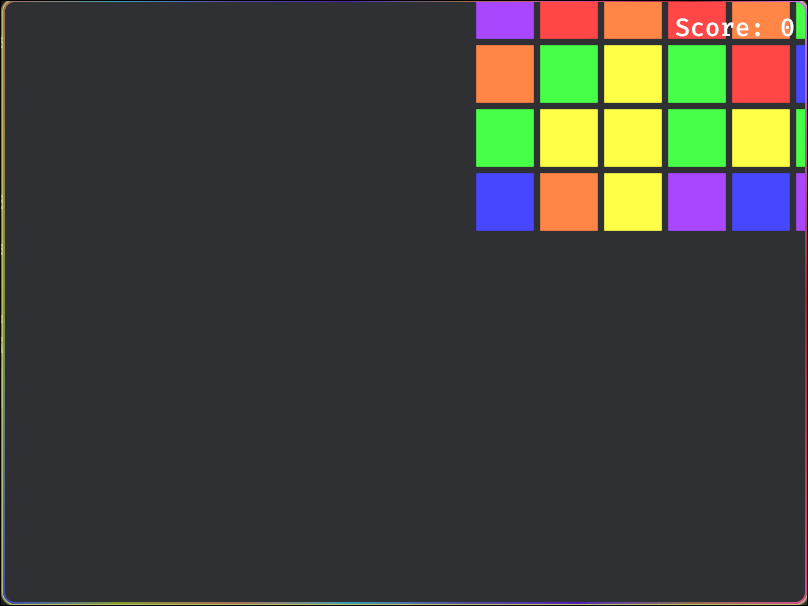
Misaligned grid display

Claude said bevy’s coordinates for 0,0 was the center of the window and fixed rendering the grid inside the window. This turned into a series of follow-up prompts by me to fix grid calculations. All the code was done by Claude with my prompts. The commit details all generated by Claude and pretty complete.

The game is incomplete and the README.md has suggestions for enhancements but first focusing on the core logic. There is still some issue with match removal that seems to mess up the grid of gems from a logic standpoint, not visual. I asked to write a test to make sure the grid shows expected gems after a successful match. I’ll dive in later to fix remaining issues and maybe polish the app up. I am impressed with AI handling the prompts for bugs which is what I wanted to get out of this to see how robust AI is in analyzing root cause. Now when I did the first prompt it fixed the rendering but not the other areas, which caused subsequent prompts to fix those areas as well.

I absolutely love the detailed commit messages. They are a thing of beauty, like this example.
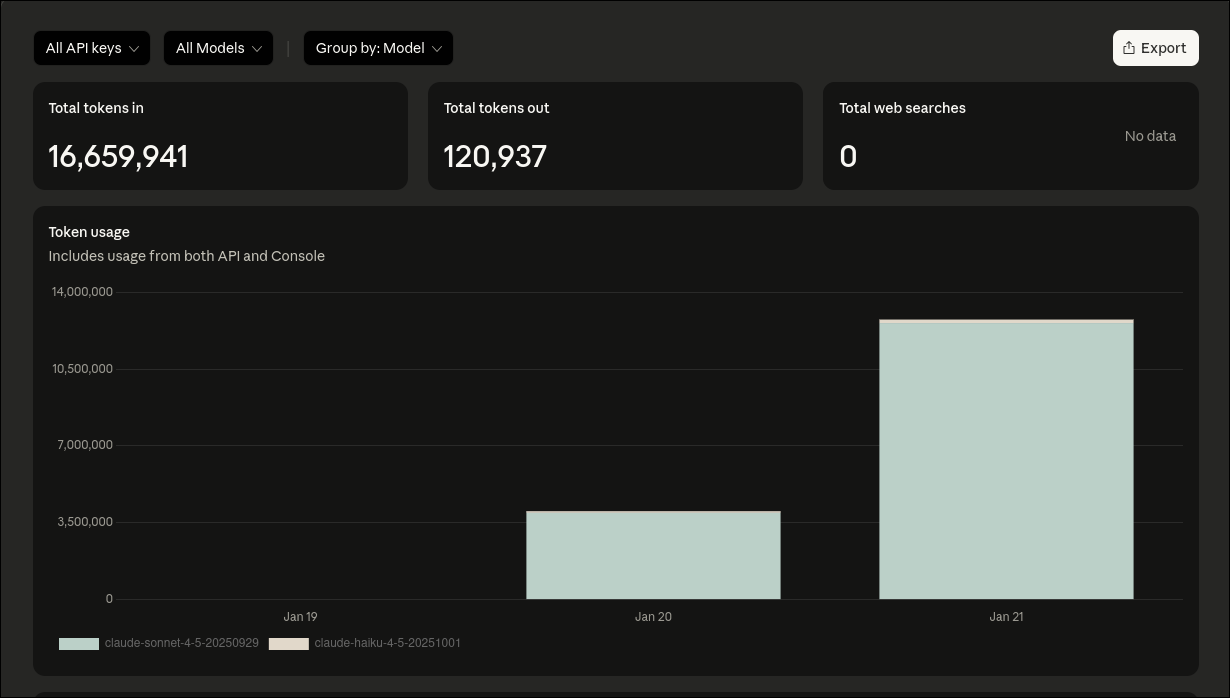
Debug visualization and commit messages

Total cost was about $10. When I generated the plan it said estimate for a meat bag coder was 20 days.

Resulting repository: https://gitlab.com/geoffcorey/match3/-/commits/master

Update

Looking through the commits you can see there was several issues with coordinate source of truth. Once that was resolve the major bug was tiles/gems were bleeding. There was a lot of back and forth with Claude and I screenshot the game and told Claude you can see the bug here.
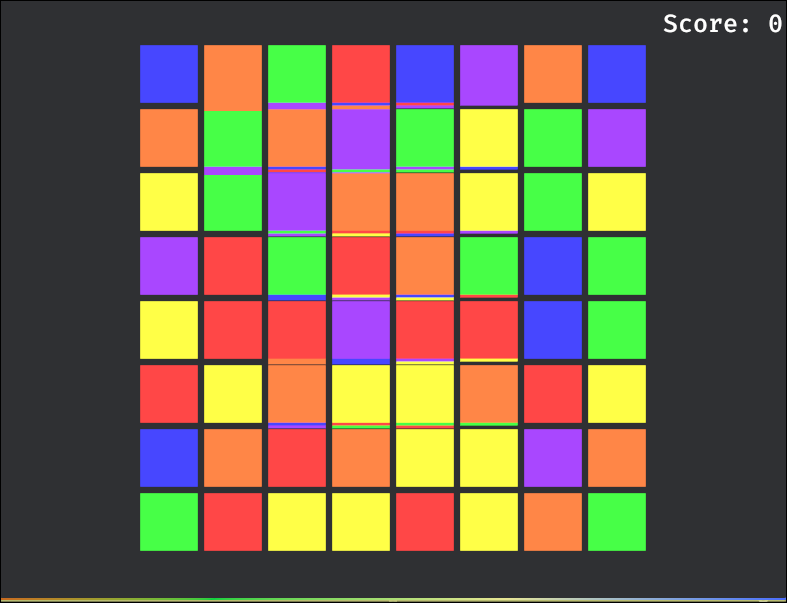
Gem bleeding bug

Claude created debug lines and started the game and did following modifications until it was fixed. It was impressive.

Experiment #2

I used Opus to /plan a poker site with the plan prompt of

A real-time multiplayer poker website with user accounts, admin-defined tables, chip tracking, and player-to-player transfers. Supports Texas Hold’em, 5-Card Stud, 7-Card Stud, Pot Limit Omaha, and Big-O Hi/Lo.

Asked various library questions to use and at the end it asked if I wanted claude to implement it. I screwed up and said yes without changing the model from Opus to Claude so after some client interaction bug fixing the whole thing cost me more . . . about $25.
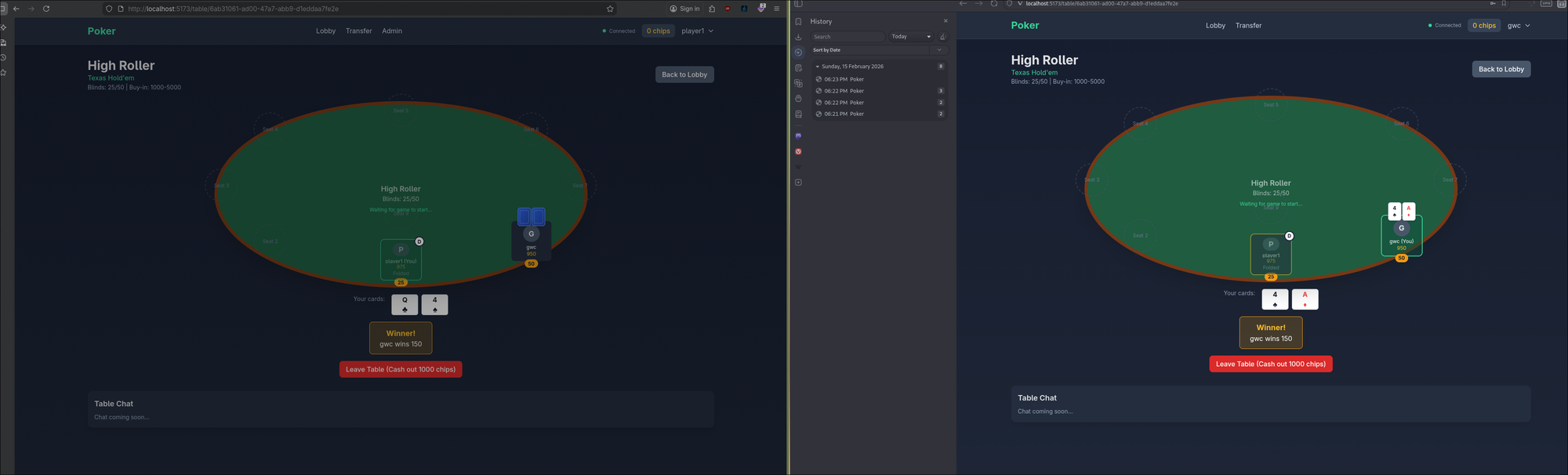
Poker site plan

One bug still there is no matter which game I setup on a table, it is still just Texas Hold’em. I will have to follow up and explain how the other games are played.

Generated code was all done by Opus at https://gitlab.com/geoffcorey/poker

© 2025 - 2026 Geoff Corey's Blog

🌱 Powered by Hugo with theme Dream.

About Me

Contact

Email: me @ geoffcorey.com

Current Role

North - Senior Manager (Aug 2019 - Present, Remote) Manager for PayAnywhere API team utilizing Node.js, PostgreSQL, Snowflake, and AWS.

Professional Experience

IBM - Software Developer

Oct 2015 - Aug 2019 | Durham, NC

  • Developed open-source continuous delivery services for Kubernetes
  • Built IBM Cloud Kubernetes Service API/CLI with GoLang and Docker
  • Created IBM Bluemix DevOps tools using Cloud Foundry and Node.js
  • Patent filed Mar 31, 2017: “Container chaining for automated process completion” (US20180285156A1)

UDU LLC - Application Architect

Dec 2014 - Sep 2015 | Durham, NC

  • Reduced infrastructure costs by 60%
  • Designed REST services with MongoDB, Redis, Node.js on AWS
  • Developed chat service using Node.js and Faye
  • Created microservices for image manipulation
  • Evaluated Docker container architectures

TotalCast LLC - Director of Technology

Mar 2014 - Dec 2014 | Raleigh, NC

  • Commercialized patents for Capitol Broadcasting Company
  • Managed TV watch app development for WRAZ FOX50
  • Designed DRM server for encrypted Apple HLS streams in GoLang
  • Built auto-scaling architecture on AWS

Additional Notable Positions

  • Ignite - Contract Software Engineer (Nov 2013 - Feb 2014)
  • 6fusion USA - Senior Software Engineer (Sep 2011 - Oct 2013)
  • Independent Consultant (Jul 2008 - Sep 2011)
  • National Cinemedia/Creoss - Program Manager (Mar 2011 - Jul 2011)
  • ESRG Tech/Creoss - Program Manager (Nov 2009 - Dec 2010) - U.S. Navy engine monitoring systems
  • Digitalsmiths - Senior Software Engineer (Sep 2008 - Nov 2009)
  • GameVee.com - Development Lead/Application Architect (Feb 2007 - Sep 2008)
  • Pheasant Creek Coffee LLC - Owner (Jul 2004 - Feb 2008)
  • Sprint - Senior Manager (Jul 2001 - Jul 2004) - Led team of 30+ for SprintPCS.com
  • Red Sky Interactive - Team Lead (Sep 2000 - Jul 2001)
  • Online Insight, Inc - Manager of Technical Services (Jul 1999 - Sep 2000)
  • McKesson HBOC - Software Engineer (Nov 1998 - Jul 1999)
  • ClientLink, Inc - Director of Object Technologies (Feb 1997 - Aug 1998)
  • Additional roles from 1990-1996 in database and software engineering

Education

University of North Carolina at Greensboro BS, Information Systems and Operations Management (1985-1989)

Patents

Container Chaining for Automated Process Completion

View on Google Patents

This patent describes “a method obtains a configuration for an automated process that includes discrete tasks.” The system allows users to specify different container images for each task and define the sequence for instantiating containers to complete the process. The method automatically identifies the next container to execute and repeats this process until all tasks are finished.

Intra-Media Demarcation

View on Google Patents

This patent presents a mechanism enabling users to “mark one or more sections of the media’s timeline for later reference.” The system stores demarcation data as metadata while preserving the original media intact. An enhanced player can then display these highlighted sections during playback without modifying the source material, allowing viewers to experience both the complete media and the annotated portions.